Autodesk Fusion for Computer-Aided Engineering

Computer aided engineering (CAE): What is CAE and CAE software

Computer‑aided engineering lets teams simulate, analyze, and optimize designs before building, reducing risk, cost, and time with integrated CAE in Autodesk Fusion.

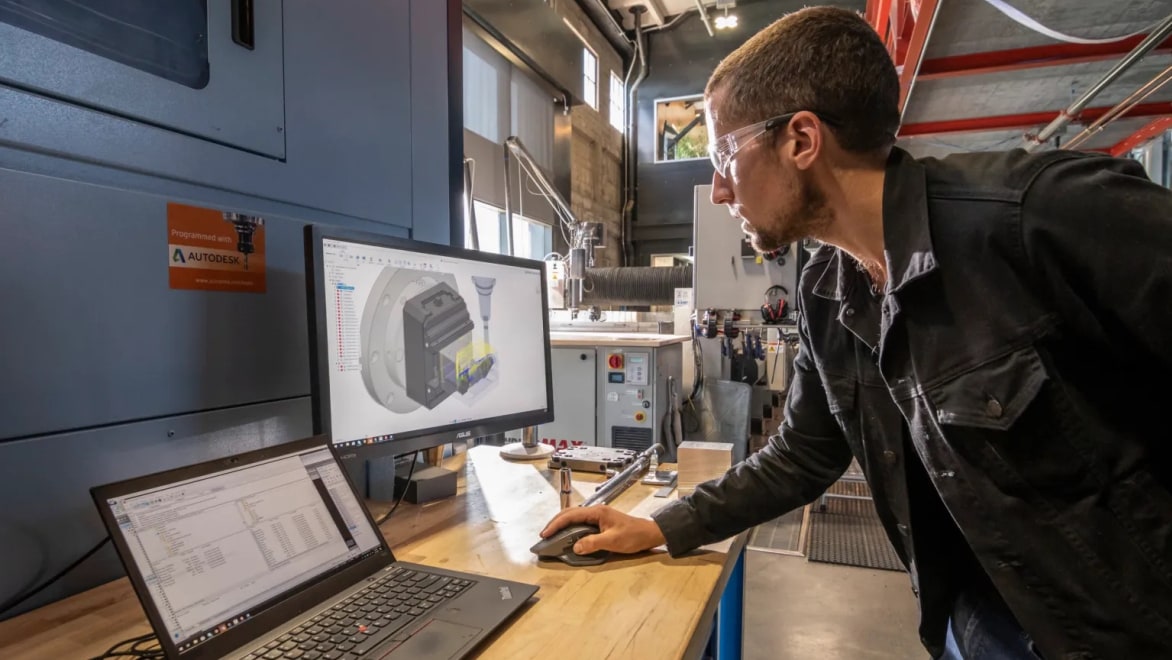
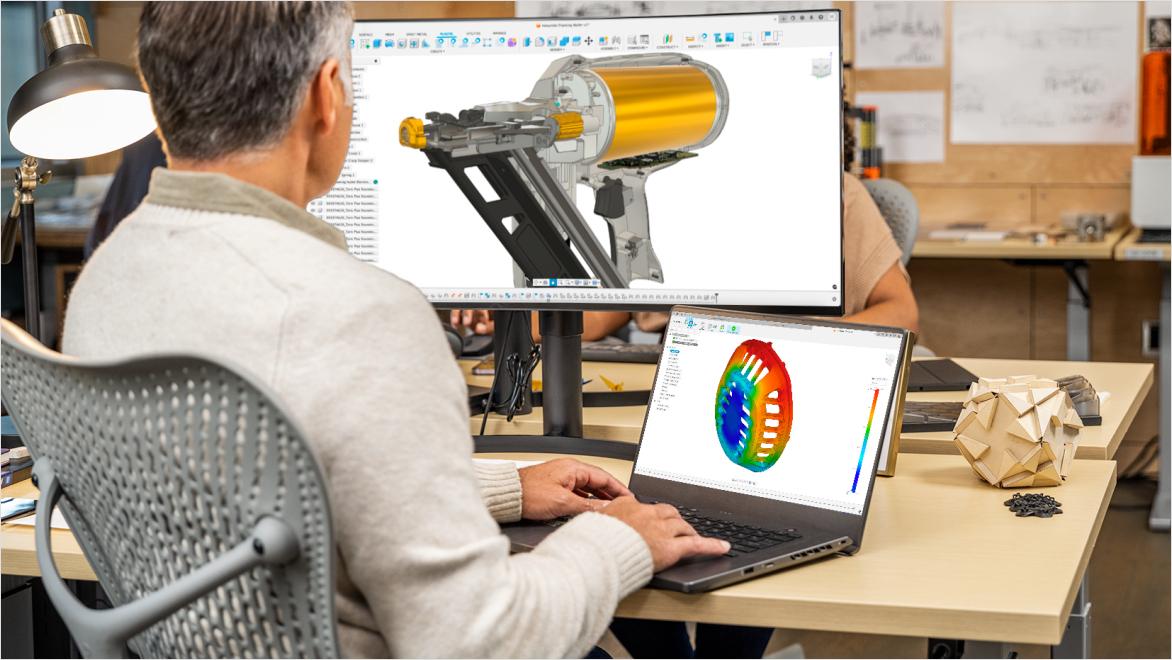
using Autodesk Fusion to prepare a milling project on the Matsura MX-330 machine.

What is computer aided engineering (CAE)?

Computer aided engineering (CAE) refers to the application of computational methods and simulation technologies to evaluate and improve engineering designs. CAE allows engineers to predict how a product will behave under real‑world forces—such as stress, heat, vibration, and fluid flow—without relying solely on physical testing.

By using CAE simulation, teams can:

  • Identify potential design issues early
  • Compare multiple design options quickly
  • Reduce reliance on costly prototypes
  • Accelerate product development cycles

CAE is widely used across industries including automotive, aerospace, industrial equipment, electronics, and consumer products.

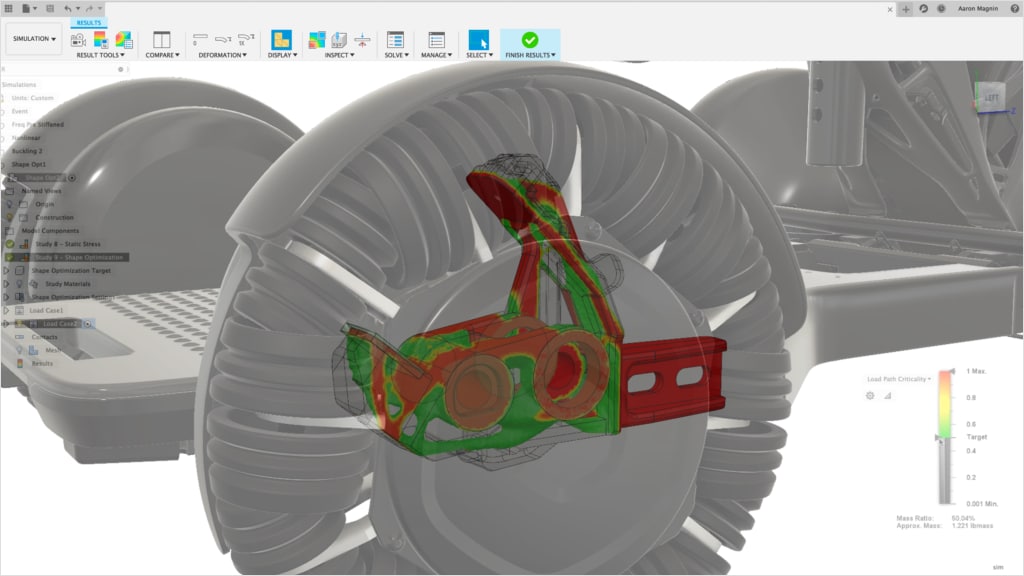
CAE software, Autodesk Fusion.

What is CAE software?

CAE software is a category of engineering software used to model, simulate, validate, and optimize product designs and manufacturing processes. CAE software applies physics‑based and mathematical models to analyze how parts and assemblies perform under various operating conditions.

Modern CAE software supports disciplines such as:

  • Structural and stress analysis
  • Thermal analysis
  • Fluid flow and heat transfer
  • Multibody dynamics and motion analysis
  • Multiphysics simulation

By integrating CAE software into the design process, engineering teams can improve product reliability, durability, and efficiency—while reducing development costs.

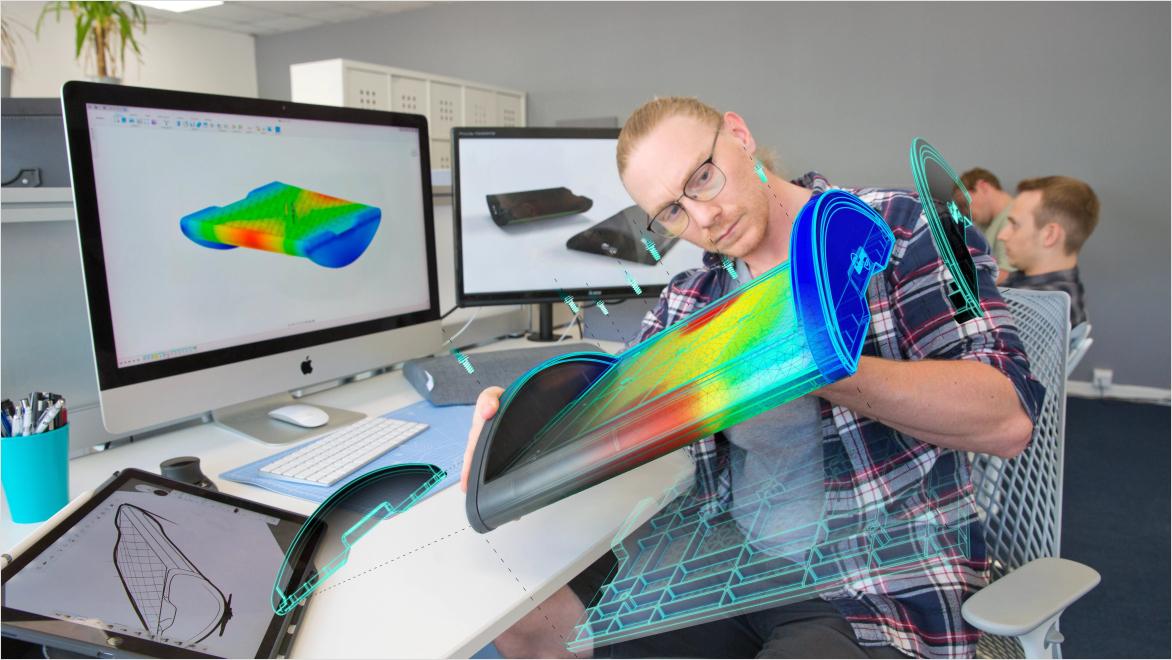
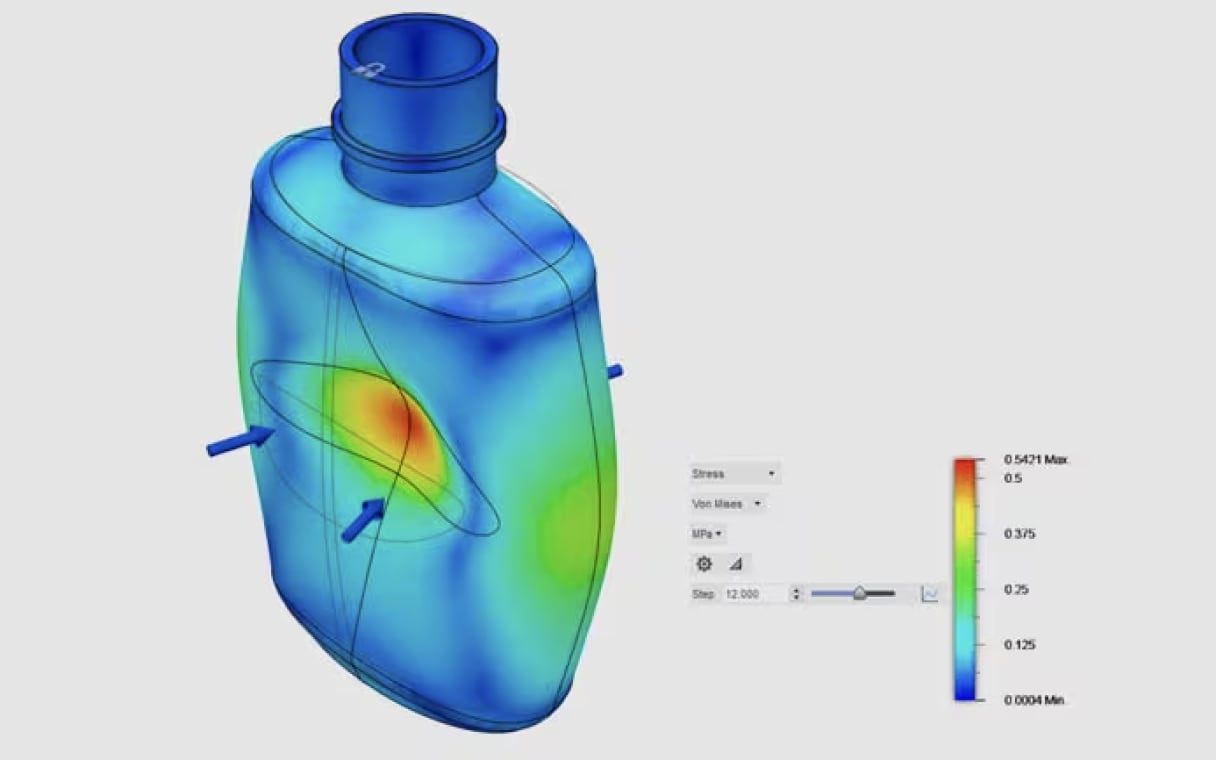
Simulation analysis in Autodesk Fusion.

What is CAE simulation and how does it work?

CAE simulation is the process of digitally testing a product design using computer‑based models instead of physical prototypes. CAE simulation helps engineers understand how a design will respond to real‑world conditions before manufacturing begins.

A typical CAE simulation workflow includes:

  1. Pre‑processing: Defining geometry, materials, loads, and constraints
  2. Solving: Running the simulation using physics‑based solvers
  3. Post‑processing: Visualizing and analyzing results to guide design decisions

This simulation‑driven approach enables faster iteration, better design decisions, and reduced risk before production.

Autodesk Fusion simulation capabilities for computer-aided engineering

Autodesk Fusion for computer aided engineering

Autodesk Fusion is an integrated CAE software solution that combines CAD, CAM, ECAD, and CAE simulation in a single, cloud‑based environment. This eliminates disconnected workflows and enables teams to analyze designs directly within the same system used for modeling and manufacturing.

With Fusion, engineers can:

  • Run CAE simulations directly on design geometry
  • Iterate designs and validate performance in real time
  • Collaborate across teams using a shared data environment
  • Transition seamlessly from simulation to manufacturing

This connected workflow helps teams move faster while maintaining accuracy and design intent.

Benefits of computer aided engineering software

Faster design iteration and validation

Access advanced simulation study types in computer-aided engineering software to validate real-world design performance through side-by-side design comparisons.

Improved product performance and reliability

By simulating real-world conditions, CAE software enables the prediction and improvement of product performance and reliability before manufacturing, ensuring optimal product functionality.

Lower costs and reduced time to market

CAE software allows virtual prototyping, reducing the need for costly and time-consuming physical prototypes, and speeding up the product development cycle.

Featured CAE software

Gain access to advanced design and simulation tools.


Optimize part design and performance with unlimited cloud solves for generative design, FEA, electronic cooling, injection molding, and more.


CAE capabilities in Autodesk Fusion

Nonlinear Static Stress

Nonlinear Static Stress

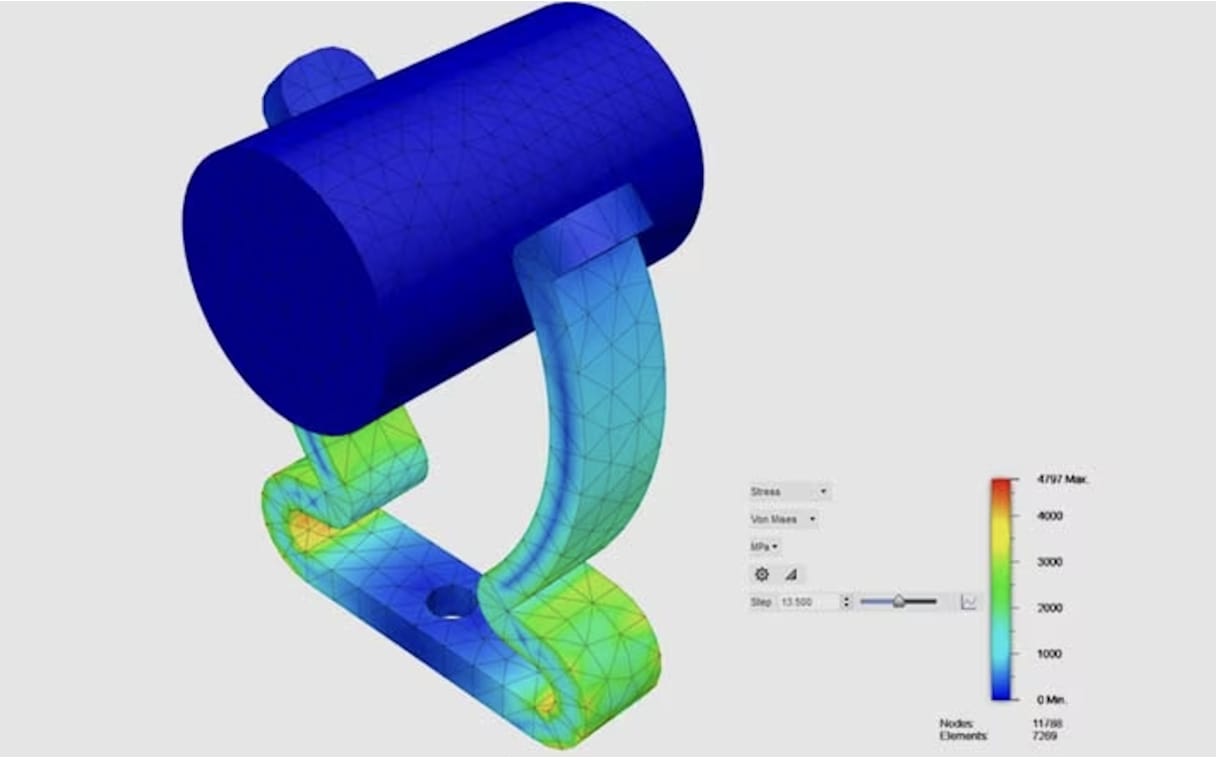
With the ability to simulate large deformations, motion, and contact behaviors on nonlinear materials, this CAE capability is pivotal in predicting how materials and structures will respond under diverse stress conditions, thus enhancing design reliability.

Structural Buckling

Structural Buckling

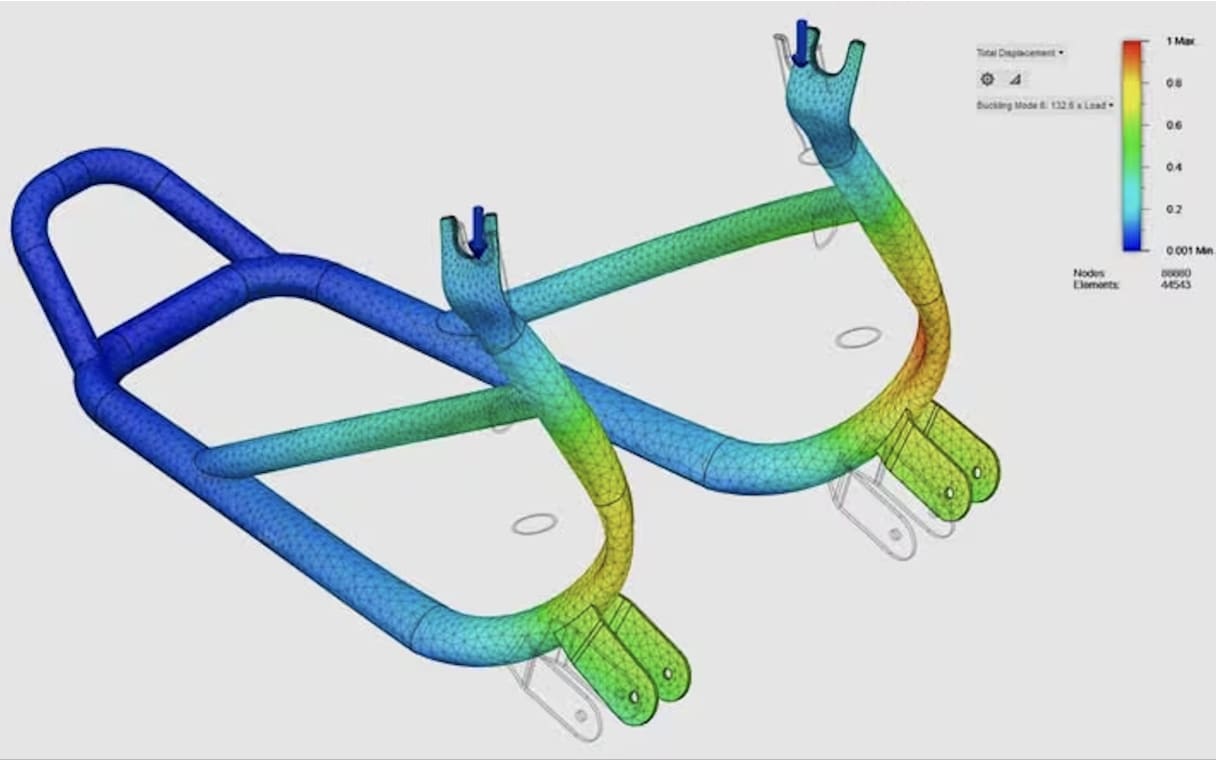
This CAE feature offers critical insights on potential structural failure due to buckling. By simulating how structures react under various loads, designers can refine their designs and mitigate risks associated with structural instability.

Event Simulation

Event Simulation

By predicting how time-dependent forces influence 3D design performance, this CAE capability enables designers to anticipate and mitigate potential issues, thereby improving product reliability and lifespan.

Modal Frequencies

Modal Frequencies

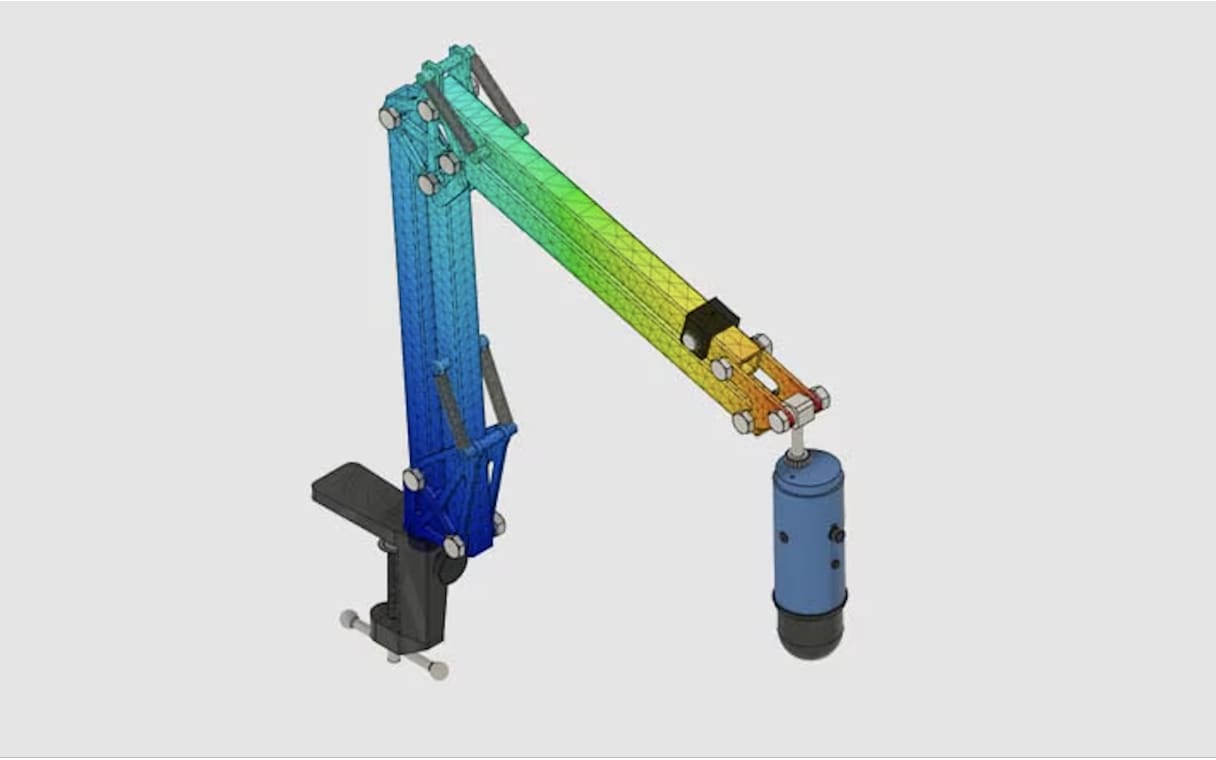
This feature allows designers to analyze the effects of natural vibrations on parts or assemblies. Understanding these resonant frequencies is crucial in CAE to prevent potential structural failure and optimize design.

Thermal Simulation

Thermal Simulation

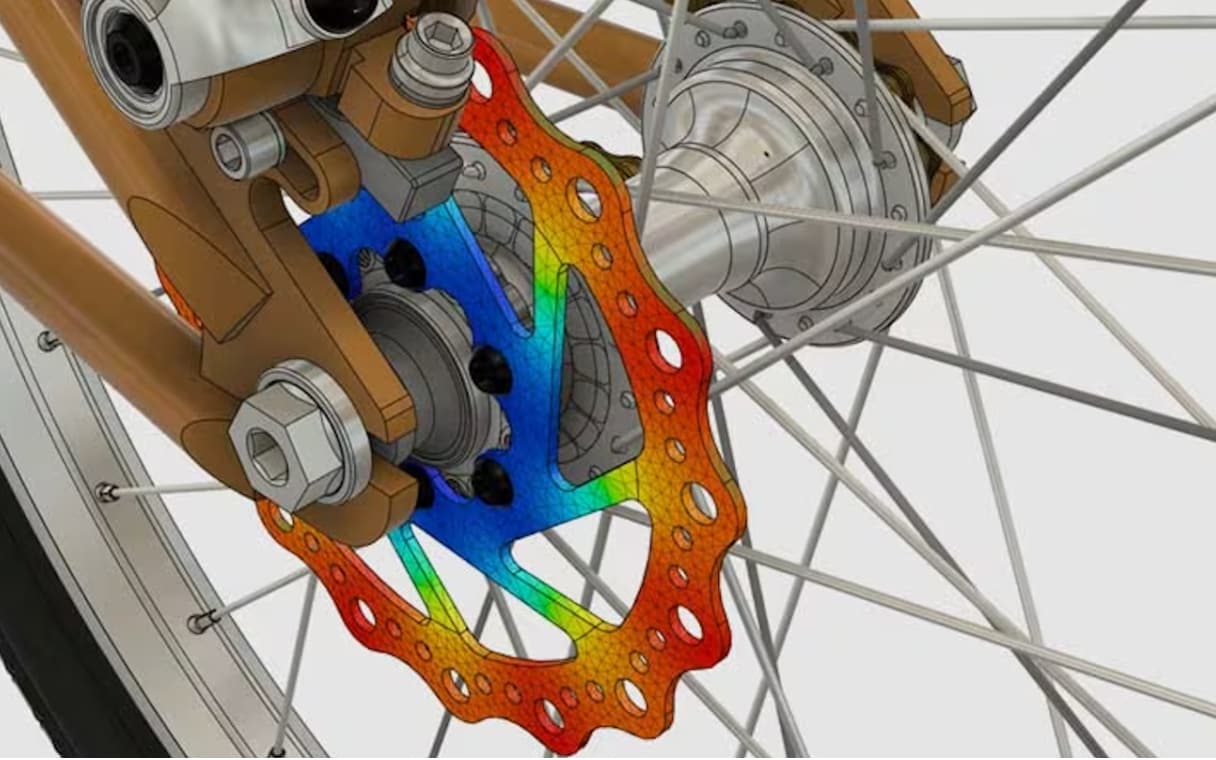
This feature allows designers to simulate heat transfer and temperature-induced stresses. It's crucial for understanding how temperature changes affect system performance, aiding in the design of thermally efficient and reliable systems.

Try CAE software for free

Test-drive Autodesk Fusion for computer-aided engineering and discover advanced tools for analysis and optimization—free trial available now.

CAE tools for consumer products development

CAE software for real-world product development

Organizations across industries use computer‑aided engineering (CAE) in Autodesk Fusion to move products from design to production faster and with less risk. Integrated, designer‑friendly simulation tools enable teams to validate performance and quality early—before manufacturing—reducing delays, rework, and cost.

From manufacturing and medical devices to robotics and sustainability, Fusion helps teams simulate real‑world conditions, optimize material use, and improve reliability across a wide range of applications.

With Fusion CAE, teams can:

  • Validate product performance and quality before manufacturing
  • Minimize costly delays, rework, and physical prototypes
  • Use intuitive, easy‑to‑adopt analysis tools built for designers

Types of CAE simulation

Computer aided engineering (CAE) includes a wide range of simulation types, each focused on different physical behaviors.

Stress analysis


Using Finite Element Analysis (FEA), CAE software can simulate and predict how a product will respond to physical forces like tension, compression, and shear. This helps engineers optimize and validate their designs to ensure durability and reliability.

Computational fluid dynamics


CFD simulation analyzes fluid flow, airflow, and heat transfer. This is critical for applications involving aerodynamics, cooling, HVAC, and fluid systems.

Thermal analysis


Thermal simulation predicts temperature distribution and heat transfer within a product, helping ensure performance and reliability in temperature‑sensitive environments.

Multibody dynamics


Multibody dynamics simulation evaluates motion, forces, and interactions between connected components—ideal for mechanisms, robotics, and vehicle systems.

Multiphysics simulation


Multiphysics CAE simulation analyzes how multiple physical effects, such as structural, thermal, and fluid behaviors, interact within a single model.

Finite element analysis (FEA)


FEA is used to simulate stress, strain, and deformation in parts and assemblies. Engineers use FEA to validate structural integrity and make sure that designs can withstand real‑world loads.

How organizations use CAE software to optimize designs

Kawai Plastic Industry

Kawai Plastic Industry

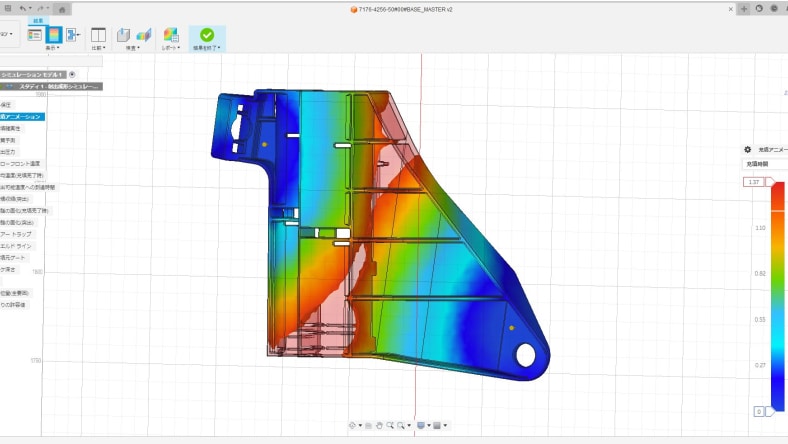
Kawai Plastic Industry used the Fusion Simulation Extension, a Computer-Aided Engineering (CAE) tool, to run injection molding simulations and flow analyses. This allowed them to prevent short shots in their process, visually confirm mold accuracy, and reduce the number of trial injection runs by 25%, significantly improving their cost efficiency.

Dr. Hannes Schwenke

Dr. Hannes Schwenke

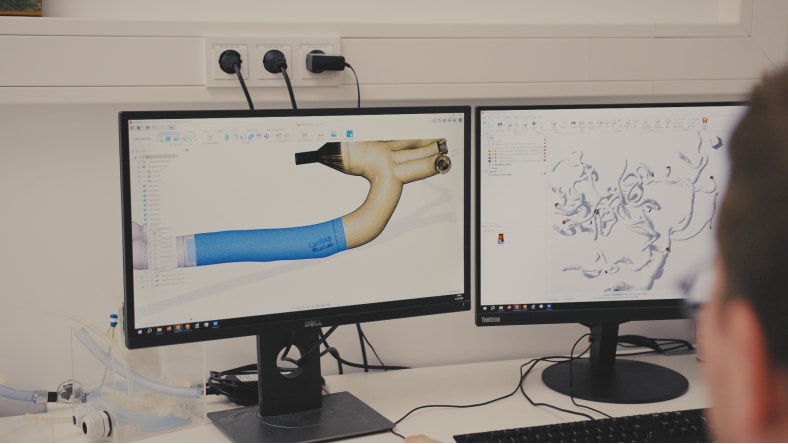
Dr. Hannes Schwenke used Computer-Aided Engineering (CAE) in the form of 3D modeling and printing technologies. Using Autodesk Fusion and Netfabb, precise 3D models of artery systems and brain aneurysms were created. These models helped in visualizing complex surgical procedures, improving surgeon training, and enhancing patient treatment outcomes.

Coral Maker

Coral Maker

Coral Maker used Computer-Aided Engineering (CAE) through Autodesk Fusion to design and prototype molds for mass manufacturing coral skeletons. They also used it to test robotics systems for seeding corals. This CAE tool facilitated iterative design improvements, and enabled the use of CNC machines and 3D printing for manufacturing.

ACWA-ROBOTICS

ACWA-ROBOTICS

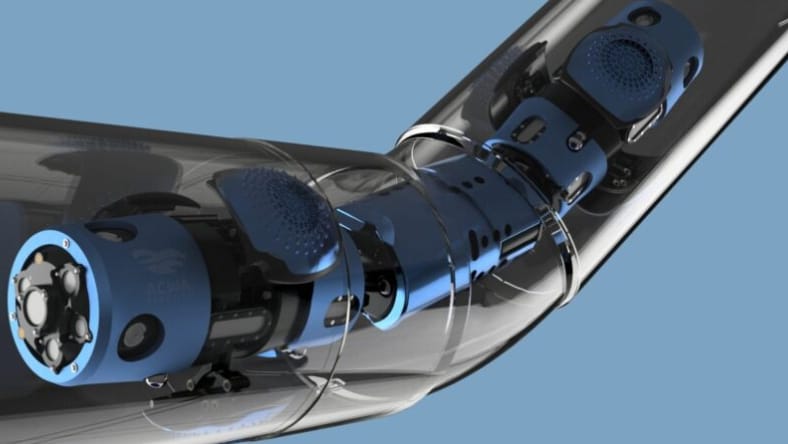
Discover how ACWA-ROBOTICS uses Autodesk Fusion to design water pipe-inspecting robots. The article underscores the significance of Computer-Aided Engineering (CAE), particularly simulations for assessing mechanical durability and thermal characteristics. These CAE features in Fusion are crucial to successfully designing and optimizing the robot's performance.

Future of computer-aided engineering

The future of computer-aided engineering

The future of computer-aided engineering (CAE) is driven by advancements in artificial intelligence (AI) and machine learning. AI-driven generative design tools will automate complex geometries, significantly reducing iteration time. Real-time data from Internet of Things (IoT) devices will provide continuous feedback, enabling adaptive design processes that evolve to meet changing conditions.

Another significant trend is the increasing accessibility of engineering tools through cloud-based platforms. Cloud computing will allow global collaboration complex projects without expensive local hardware.

Fusion resources for computer-aided engineering (CAE)

Get started with CAE with these informational blog posts.

In product development, Computer-Aided Engineering (CAE) swiftly validates designs before manufacturing, reducing costs, time-to-market, and enhancing product quality.

This article expands upon CAD, CAM, and CAE, advantages across crucial touchpoints in the end to end product development process.

Explore the world of Computer Aided Engineering (CAE), highlighting its crucial role in modern product development.

Discover how Autodesk Fusion revolutionizes product development with its powerful CAE capabilities, seamless simulation, and innovative digital prototyping in a robust cloud-based environment.

Here are some factors to consider when choosing a CAE software solution and a breakdown on how Autodesk Fusion can help.

Product development uses CAE software like Fusion for rigorous testing and design enhancements under varied conditions.

Frequently asked questions (FAQ) on computer aided engineering and CAE software

What is CAE?

Computer‑aided engineering (CAE) is the use of simulation software to analyze, validate, and optimize how a product will perform under real‑world conditions. CAE helps teams test factors like strength, heat, and motion digitally before manufacturing begins. In Autodesk Fusion, CAE is integrated directly into the design workflow, making simulation a natural part of product development.

What is CAD simulation?

Computer‑aided engineering (CAE) simulation uses software to digitally test how a product will perform under real‑world conditions. This includes factors such as structural stress, thermal loads, or fluid flow before anything is physically built. In Autodesk Fusion, these simulations are integrated directly into the design environment, allowing teams to test and refine ideas earlier in the process.

What is the difference between CAD and CAE?

CAD (computer‑aided design) focuses on creating and defining product geometry, while CAE analyzes and validates how those designs will perform in real‑world scenarios. With Autodesk Fusion, CAD, and CAE work together in a single platform, enabling a seamless transition from design to simulation without switching tools.

Is CAE software only for analysts?

No. Modern CAE software is accessible to designers and engineers, not just simulation specialists. Autodesk Fusion includes intuitive, designer‑friendly CAE tools that make it easier for teams to run simulations, understand results, and make informed decisions without deep analysis expertise.

Why is computer aided engineering important?

Computer‑aided engineering helps teams reduce development risk, improve product quality, and shorten time‑to‑market by identifying issues early. By validating performance before manufacturing, Autodesk Fusion enables teams to minimize rework, reduce reliance on physical prototypes, and move from concept to production with greater confidence.

What industries commonly use CAE software?

CAE software is used across a wide range of industries, including manufacturing, consumer products, medical devices, robotics, electronics, and sustainability‑focused design. Teams in these industries rely on CAE to validate performance, improve reliability, and reduce development risk. Autodesk Fusion supports these workflows with flexible simulation tools designed for modern product teams.

What features matter most in CAE software?

There are several key features to consider most when evaluating CAE software for engineering analysis:

  • Integrated CAD‑to‑CAE workflows, so simulations stay connected to design changes and geometry updates without manual rework 
  • Core physics capabilities, such as structural stress, thermal analysis, motion, and fluid behavior, to support real‑world performance validation 
  • Ease of use and accessibility, enabling designers and engineers—not just simulation specialists—to run and interpret analyses 
  • Design iteration support, allowing teams to quickly compare design options and refine performance early in development 
  • Workflow integration and collaboration, reducing handoffs between design, analysis, and manufacturing teams 

Autodesk Fusion addresses these priorities by combining CAD, CAE, and CAM in one platform, enabling continuous validation from concept through production without breaking workflows.

What CAE software is beset for engineering analysis?

The best CAE software depends on your team’s needs, experience level, and workflow. Many organizations choose Autodesk Fusion because it combines CAD, CAE, and CAM in a single platform. Engineers and designers can analyze performance without switching tools or exporting data between systems.

How do companies use CAE software to reduce risk?

Companies use CAE software to identify potential design issues early, before they become costly problems during manufacturing. By simulating real‑world conditions, teams can uncover weak points, optimize materials, and validate design decisions sooner. With Fusion, this risk reduction happens earlier and more often because simulation is embedded directly in the design process.

How does CAE software support product validation?

CAE software supports product validation by allowing teams to test performance, quality, and reliability digitally. Instead of relying solely on physical prototypes, teams can use simulation to confirm that a design meets requirements before production. Autodesk Fusion enables this validation to happen continuously as designs evolve.

How does integrated CAD/CAM/CAE help consumer product teams?

Integrated CAD/CAM/CAE helps consumer product teams move faster by eliminating handoffs between disconnected tools. In Autodesk Fusion, design, simulation, and manufacturing workflows live in one environment—making it easier to iterate quickly, validate performance, and transition smoothly from concept to production. See a complete list of features here.

How does CAE software integrate with CAD workflows?

Modern CAE software integrates directly with CAD models, allowing simulations to update automatically as designs change. In Fusion, CAE tools use the same geometry as CAD, so teams can test ideas, refine designs, and rerun analyses without recreating models or managing file transfers.

Is Autodesk Fusion a good CAE software solution?

Yes. Autodesk Fusion is a strong CAE software solution, especially for product design and manufacturing teams that want simulation tightly integrated with CAD and CAM. Autodesk describes Fusion as a comprehensive CAE platform that enables engineers to simulate real‑world performance, validate designs, and optimize products—all within a single environment that connects design, engineering, and manufacturing workflows.

Is CAE in Autodesk Fusion easy to learn?

Yes. CAE in Autodesk Fusion is intuitive and accessible for designers and engineers, not just simulation specialists. Built‑in guidance, visual results, and simplified setup help teams get meaningful insights without extensive analysis expertise.


Fusion’s CAE capabilities are embedded directly into the design process, allowing teams to run simulations earlier and more often without exporting models or switching tools. 

How to chose CAE software for business use?

When choosing CAE software, businesses should consider ease of use, integration with existing workflows, scalability, and total cost of ownership. Platforms like Autodesk Fusion are well‑suited for teams that want integrated design, simulation, and manufacturing tools to support faster development and better decision‑making.

See more FAQ